3 Rs

Ready

Reliable

Reasonable

Monday, October 13, 2014

Tremor

My Benign Essential Tremor started when I was about nine or ten years of age. I used to build model planes out of plastic as opposed to wood because I experienced difficulty carving the balsa to the desired shape. I don’t recall if I had tremors when working with wood. I do recall having difficulty putting the small sails and thread-like webbing on the Nina, Pinta and Santa Maria, my first models when I was a boy. Plastic pieces that fit into each other with a male and female connection were easier to assemble than playing with wood.

My tremor was dianosed as a neurologic movement disorder by Dr. Michael Stuparyk in 1983. He referred to it as a benign essential tremour, It is characterized by involuntary fine rhythmic tremor of my left arm and hand. It has affected my head slightly, and as I entered my senior years it has affected my voice, tongue, and the roof of my mouth (palate), which at times makes it difficult to articulate speech. In retrospect, when I was in Grade 5, I had to attend a special class after school for an hour. My teacher told me that I wasn’t articulating my words clearly. It was referred to as Speech Class, or that’s what I remember it being called.

My neurosurgeon, Dr.Andres M Lozano of Toronto Western Hospital   simply calls it an Essential Tremor. Benign is usually associated with person s who have a growth that is non-cancerous. That may be why the word 'benign" was dropped.

Unlike people with Parkinson’s disease, the Essential Tremor is non-life threatening. Tremors increase in amplitude with age, usually starting in the forties. In my case, manipulating utensils and drinking liquids from a glass is a challenge.

I was in a restaurant one time and the waitress asked what we wanted to drink. I replied, “I’ll have an apple juice with a straw.” The other three of my colleagues ordered coffee. She looked at me funny and said, “Would you like the kiddie’s menu as well?” I replied with no facial expression and looked her right in the eyes, “I’ll have an apple juice with a straw, please.” I didn’t get upset with her. She didn’t know. I wasn’t offended at all. Some people are ignorant of the disabilities of others. Besides, to put the scene into context, we were joking and laughing before she popped the question. As we ate our breakfast and she noticed my tremors, as I spotted her in my peripheral vision, she had a hurt look on her face bordering on remorse. Poor woman.

Before my deep brain implant to control my tremors, I stopped going out to restaurants. It was just too embarrassing. I changed my attitude with the implant. Although my tremors have come back, I still go to restaurants. If it’s a buffet, I get the person in front of me to put food on my plate People are genuinely nice. They have made my life easier and I am grateful.

This piece about my tremor is an introduction to what is to come. I am going to post videos on YouTube with me building my pneumatically controlled Canadarm, piece by piece. It will be a mini-how-to-series especially for people with tremors. We have to feel useful and that we can contribute something. I am fortunate. I have conducted science workshops for children and adults on how to build my Canadarm. It is great fun.

I have a workshop coming up on Saturday, November 15, 2014 from 2:15-3:15 pm. The following is posted on the on-line flyer: " Pneumatic models such as: Front end loaders, Hickory Dickory Dock clock, Brakes and Tow Truck models will be demonstrated. Participants will build a miniature pneumatic controlled Canadarm to take home." (Resource: www.stao.ca/program).

China to Mars

An purportedly anonymous official of the China National Space Administration has indicated that China will continue with its deep space mission and that it will put a man on Mars in 2020.

I do a Space workshop with Grade 6 students through Scientists in School (www.scientistsinschool.ca). In my presentation, I state that China will be the first country to put a man on Mars. My rationale is quite simple: China doesn't have the battles of the budget that plague Western countries. China's leader doesn't change as frequently as Western leaders which simply means it is easier to stay the course.

I interviewed a scientist a few years ago who was involved with the James Webb Space Telescope (JWST). "Positioned 1.5 millions km from Earth in the cold darkness of space, JWST will be able to discover and study objects thousands of times fainter than those seen by current telescopes." (This quote is from an article I published in Crucible, September, 2010). The telescope was to be launched in 2012. It's still on the ground in a laboratory. The USA changed leaders and the telescope was no longer a priority.

Each country has its own brilliant scientists. I was pleased when India sent a spacecraft to Mars; the first Asian country to do so.

Did you know that NASA through thought about setting up a launch site on Cape Breton Island (Canada) which is on the same line of latitude as Kazakhstan? They changed their minds, and leaders. The USA says it will put a person on Mars in 2030 and they have been saying this for the past five years. Too late.

I can't wait to see which country does what in the next few years of space exploration. We live in exciting times.

Thursday, July 31, 2014

Rocket Lab

A New Zealand Rocket Lab aerospace company company can build and launch a ten ton rocket at a fraction of the cost of current rockets for smaller satellite payloads. See http://www.stuff.co.nz/technology/gadgets/60372738/kiwi-rocket-company-ready-to-blast-off

Monday, July 14, 2014

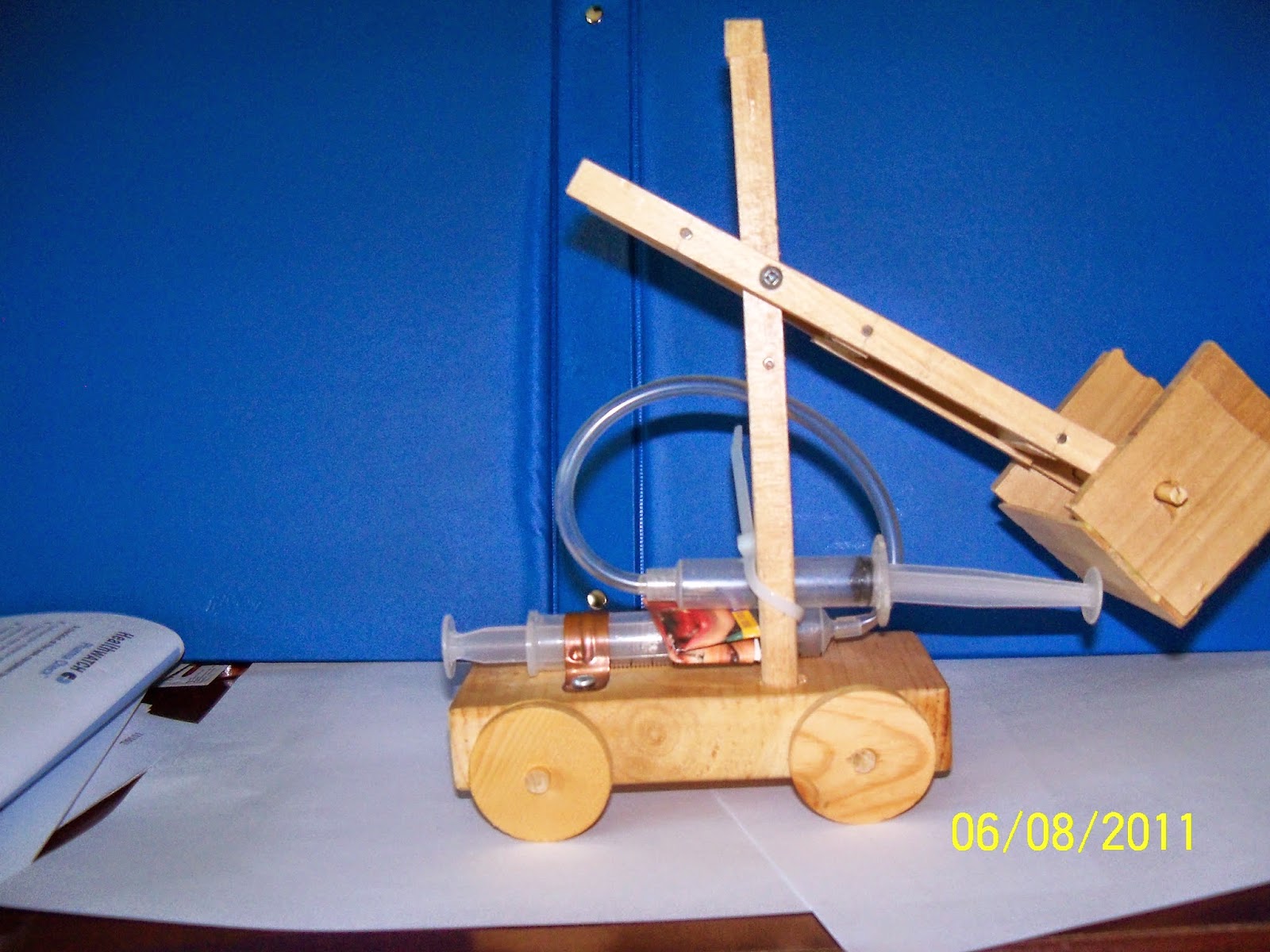
Front-end Loader

See the front-end loader my grandson Jakob made when he was 8 years old at

https://www.youtube.com/channel/UCrNQaioE97zxe7L7VN34EmQ

The story behind this 'toy', pictures and plans (pp 13-16) Taylor's Pneumatic Toys. Also check out my "Brakes" video on YouTube.
can be found in my book,

Thursday, July 10, 2014

Canadian Author Stan Taylor’s New Book

Ontario Association of Physics Teachers Conference
Book Reviews

“New book inspires young people to build scientific toys.”  Randy Attwood, Senior Editor   SpaceRef Canada Interactive Inc.

“I highly recommend this book to any parent that would like to spend some quality and creative time with their child.” David Anderson, Ph.D. Retired Physicist

“Stan Taylor has written a delightful little book that ought to be a standard classroom reference for every middle school Design & Tech teacher.” Tim Langford, Newsletter Editor, Ontario Association of Physics Teachers

Carly Reed, Steve Spangler's Manager states: “Steve Spangler’s book review team all agree that Stanley R Taylor did a great job on his book, Taylor’s Pneumatic Toys.”
 “Mr. Taylor has produced an interesting, well-illustrated, book which describes nine simplified models of miniature, pneumatic robotic items. Their parts can be ( and have been ) assembled by elementary school students. These are indeed 'educational' toys but they are also entertaining and thus will trigger many variations by the students themselves. (Well done Stan ! )”
Bruce Aikenhead, Designer of Canadarm

Stan with his pneumatically controlled Canadarm
Stan resides in Leaskdale, ON with his family

Saturday, June 7, 2014

My Pneumatically Controlled Canadarm

I am a retired educator from the Toronto Catholic District School Board. I sit on the editorial board of the Science Teachers Association of Ontario for our two e-journals, Elements and Crucible. I also do hands-on science workshops with Scientists in School.
My book, Taylor’s Pneumatic Toys, features toys elementary and secondary students can build using wood. My book can supplement the Grade 6 “Space,” Grade 8 “Fluids” and Grade 9 “Earth and Space” science” curricula. I have drawings and pictures of each toy with instructions on how to build them. Children have the opportunity to learn the joy of working with wood to the construction of an end product. My signature toy, the pneumatic Canadarm, has been a hit with children and educators alike. Four weeks ago, I taught Ray Bielecki’s AstroNut Kids how to make my Canadarm. Children ranged in age from 8 to 14 (picture top right). Last May I taught secondary educators how to build my Canadarm at the Ontario Association of Physics Teachers annual conference at the University of Ontario Institute of Technology.
I have also taught educators how to build my Canadarm at
· Space Exploration Educators Conference (SEEC) at John Space Center (NASA) in Houston, February, 2013 and 2014 and
· The Science Teachers Association of Ontario (STAO) annual conference in Toronto, November, 2012 and 2013 and I will be teaching it again in November of this year.
The first toy in my book is on the “Multiplication of Power” and can be found in the Nov/Dec 2013 edition of Canadian Teacher, pp 16-17.
Taylor’s Pneumatic Toys (ISBN 978-0-9918098-0-6) can be purchased online at Amazon, Barnes & Noble, Chapters/Indego, STAO Store, or directly from me at Stanley R Taylor Communications, PO Box 137, Leaskdale, ON L0C 1C0 for $25.00, which includes HST and shipping.
Please see the previous four posts of book reviews.
I am available to do workshops on my pneumatically controlled Canadarm within a 250 km radius of downtown Toronto with up to 30 Grades 6, 8 and 9 educators on a mutually agreeable date. I charge $25.00 per person (minimum of 10 educators) plus mileage at 40 cents/km over 100 km, one way.
Stanley R Taylor


Tuesday, March 11, 2014

Johnson Space Center, Houston

February 5-9, 2014 was full of adventure and excitement. It was my second year presenting at Johnson Space Center in Houston, Texas. Although the weather was cool (40s F) it was certainly warmer than the below freezing double digit temperatures that I left in Canada. My presenbtation went well after a rocky start. The PA system wasn't working properly. The video of Canadarm i and II prepared for me by Steve Lang of the Canadian Space Resource Center in Toronto projected clearly on the large screen behind me, but the audi feed wasn't working. I cancelled the video and jumped right into teaching the 19 educators present how to build my pneumatically controlled Canadarm. The workshop went very well as I observed broad smiles on the faces of the participants as they made their booms go up and down and watched their end effectors rotate. The participants dep[arted as I cleaned up the tables and my demstration area. I grabbed my onme remaining box of 4 and headed out to catch my bus. A woman coming in to do a presentation informed me that the bus had left. I had a sick feeling in my gut. I had to get back to mthe space center museum building to catch another bus to take me on the Mission Control Tour. A bus arrived an hour later. Missed the tour. Sigh. Later that day I went on another tour at Rocket Park and saw an Atlas 5 rocket in a huge building. I guessed it was four stories high on its side. Walking the length of this rocket seemed like a city block and then some. It was huge. I learned that the propellant came out of each stage via tiny holes on the inside of the erxhaust system. Beside these little jets were smaller jets that emitted liquid hydrogen so that the metal exhaust sections wouldn't melt under the extreme heat caused by the thrust. Stage 1 held one million gallons of fuel which it exhausted in 2 minutes. The sond Stage held half a million gallons and the third stage just under a quarter of a million gallons. All this fuel just to launch into outer space. To be continued...